
Buying a building that does not exist yet.
Most UAE residential sales are off-plan, and almost none of the people buying have done it before. This is the whole process in order, in plain language, with the paperwork named and the risks stated.
You are buying a right, not a building.
Off-plan means buying before completion, often before construction has begun. What changes hands at the start is not a property but a contractual right to a specific unit, registered with the Emirate's land department, which converts to a title deed when the building is finished.
That is the trade. You get entry pricing, a staged payment schedule instead of a lump sum, and choice of unit while the building is still on paper. In return you carry delivery risk, and a gap of two to four years in which the thing you own cannot be inspected, let or lived in. The framework around it, escrow accounts, project registration and milestone-linked releases, exists to make that trade survivable. It does not make it automatic.
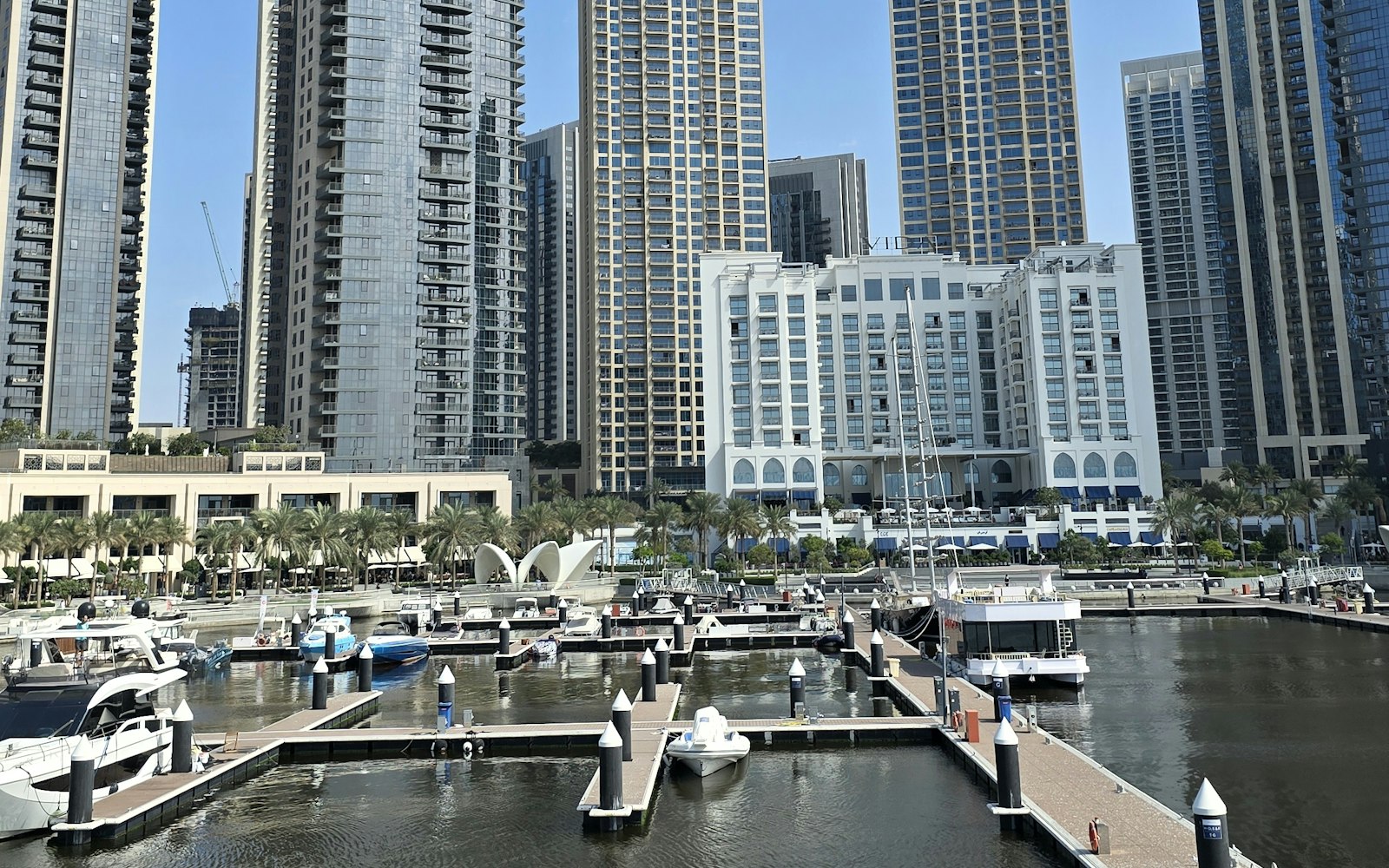
Two to four years separate the contract from the keys. Everything below happens in that gap.
The headline split is the least important part.
Every launch advertises a ratio. What actually governs your exposure is whether the instalments are tied to construction or to the calendar.
Construction-linked
Instalments fall due when certified building milestones are reached, foundation, structure, MEP, finishing. If the build slows, your payments slow with it. This is the structure that keeps your money and the developer's progress tied together.
Preferable, and worth asking for by name.
Time-linked
Instalments fall due on fixed calendar dates whether or not the building has advanced. You can find yourself substantially paid up on a project that has barely moved.
Read the schedule carefully before signing.

The current default
60% across construction, 40% at handover. The most common structure in the Dubai market today.
Front-loaded
80% during construction against staged checkpoints, 20% on completion. More of your capital is committed earlier, so the developer's delivery record matters more.
Even
Half across the build, half at handover. Less early exposure than a front-loaded plan.
Booking, build, handover
20% at booking, 60% through construction stages, 20% on handover, the same idea as 80/20, stated with the deposit broken out.
Paying after the keys
Typically 30–50% of the price is deferred past completion, spread over two to five years. It eases cash flow and can let rental income contribute, but it is still debt to the developer, and the terms deserve the same scrutiny as a mortgage.
The long drip
A marketing structure that spreads instalments into small monthly amounts. Check what the headline conceals: the deposit, the handover lump, and the total term.
- Is it milestone-linked or calendar-linked? Ask in writing.
- What is the booking deposit, and is it inside the plan or on top?
- What is actually due on handover day, and can you fund it without borrowing?
- What happens to the schedule if the project is late?
- Are registration fees and service charges in your budget, or only the price?
The number the price list does not show you.
Government and registration costs on an off-plan purchase are fixed and knowable. We put them in front of you at stage one, before a project is named.
Indicative only. DLD transfer 4% + AED 580 admin, Oqood registration AED 4,000, trustee and NOC fees per the ranges published for off-plan transfers. Brokerage: AED 0, the developer pays us.

Low-rise coastal

High-rise urban

Masterplanned community
Seven Emirates. Seven sets of rules.
This is where newcomers are caught out most often. “The UAE” is not one property market: each Emirate has its own regulator, its own registration process, and its own rules on what a foreign buyer is permitted to hold. A brochure that says freehold is not the same as a registry that will record it.
Dubai
Dubai Land Department (DLD), with RERA as its regulatory arm
- What a foreign buyer can own
- Freehold for all nationalities in designated areas, registered in your own name.
- Off-plan protection
- Project escrow accounts under UAE escrow law, released against certified construction progress. Project and developer registration required before selling.
- Registration
- 4% DLD fee at registration, plus Oqood registration of the off-plan interest by the developer after the SPA.
The deepest and most heavily documented off-plan market in the country, and the one this site's research covers in most detail.
SourcesDLD fees and Oqood · Projectory ↗UAE escrow law · Knightsbridge ↗
Abu Dhabi
Abu Dhabi Real Estate Centre (ADREC)
- What a foreign buyer can own
- Non-GCC nationals can own in designated investment zones. Confirm the exact right being registered for the specific plot.
- Off-plan protection
- Off-plan framework under Law No. 3 of 2015, with project-specific ADREC-regulated escrow accounts and milestone-verified releases.
- Registration
- Registered with ADREC after the SPA, which issues an initial registration certificate. Confirm the current fee directly with ADREC.
A smaller, more institutionally concentrated market than Dubai, with its own regulator and its own paperwork, not a Dubai process with a different postcode.
SourcesBuying off-plan in Abu Dhabi · MPI ↗ADREC rules and fees guide ↗
Sharjah
Sharjah Real Estate Registration Department (SRERD)
- What a foreign buyer can own
- Generally not freehold for non-GCC nationals. Long leasehold and usufruct rights of up to 100 years are the usual routes, and a brochure saying “freehold” is not the same as what the registry will record.
- Off-plan protection
- Registration with SRERD is required. Off-plan escrow arrangements are less uniformly documented publicly than in Dubai, ask for the project's escrow details in writing.
- Registration
- Through SRERD. Confirm the registrable right and the fee before committing.
The single most important question here is what right you will actually hold, and for how long. Get it confirmed by the registry, not by a sales office.
SourcesForeign ownership in Sharjah · Property Finder ↗100-year usufruct rights · Lexology ↗
Ras Al Khaimah
RAK land department, with RERA-RAK regulating the sector
- What a foreign buyer can own
- Freehold available to all nationalities in designated investment zones, Al Marjan Island, Al Hamra Village and Mina Al Arab among them.
- Off-plan protection
- Developers must satisfy project registration, approvals and escrow requirements before selling off-plan.
- Registration
- Through the RAK land department. Confirm current fees locally.
Overwhelmingly an off-plan market, and currently a fast-moving one. Speed is not the same as depth: delivery records here are shorter than in Dubai, which makes developer diligence more important rather than less.
SourcesRAK real estate guide ↗RAK laws and secure transactions · TrustIn ↗
Ajman, Umm Al Quwain and Fujairah have smaller off-plan markets with their own registration authorities and their own rules on what a foreign buyer may hold. We have not tabulated them because we would rather say nothing than say something approximate about the right you would be buying. Ask us and we will get the current position confirmed for the specific project.
The questions a first-time buyer asks.
Questions about how we work rather than how the market works? Those are here
Off-plan regulation, fees and lending terms change, and they differ by Emirate. Every factual claim on this page is drawn from the references below rather than from our own estimates. None of it is legal or financial advice, and none of it replaces confirming the current position for a specific project with the relevant authority.
- Dubai off-plan process and DLD fees · Projectory ↗
- Oqood registration · EGSH ↗
- How UAE escrow law protects off-plan buyers · Knightsbridge ↗
- Off-plan payment plans explained · Dealr ↗
- Handover delays and developer track records · Real Estate Club Dubai ↗
- Off-plan resale, NOC and Oqood transfer · Place Overseas ↗
- Non-resident mortgages in Dubai · Kotook ↗
- Who pays real estate commission in Dubai · Bayut ↗

A first off-plan purchase should be a slow conversation.
Bring the questions this page raised. Nothing gets named, priced or recommended until the objective is clear, and an advisor with a salary rather than a commission can afford to take that time.
You will not be added to a calling list. Ever.